Langkawi's Beaches: Cenang, Tanjung Rhu and the Quiet Ones
Updated September 30, 2026 · 7 min read
Langkawi has one beach almost everyone stays on and several that almost nobody walks to. The gap between them is forty minutes to an hour of driving, and that single fact decides how your week goes.
This is a guide to which beach is which, what each one is actually good for, and the thing most articles leave out: how you get there.
Pantai Cenang — the one you will probably be staying on
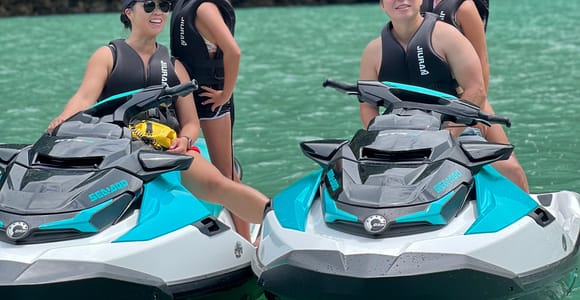
The west-coast strip, and the centre of gravity of the whole island. Hotels, restaurants, bars, dive shops, duty-free, and the boat and jet ski operators lined up along the sand.
What it is good at: everything except quiet. You can eat at nine, rent a paddleboard at ten, and be on a boat at eleven without arranging transport. If you are here for a short stay and want zero logistics, Cenang is the correct choice and there is no need to feel sheepish about it.
What it is not: empty, or particularly pretty at the busiest end. The northern stretch is calmer than the strip in front of the bars.
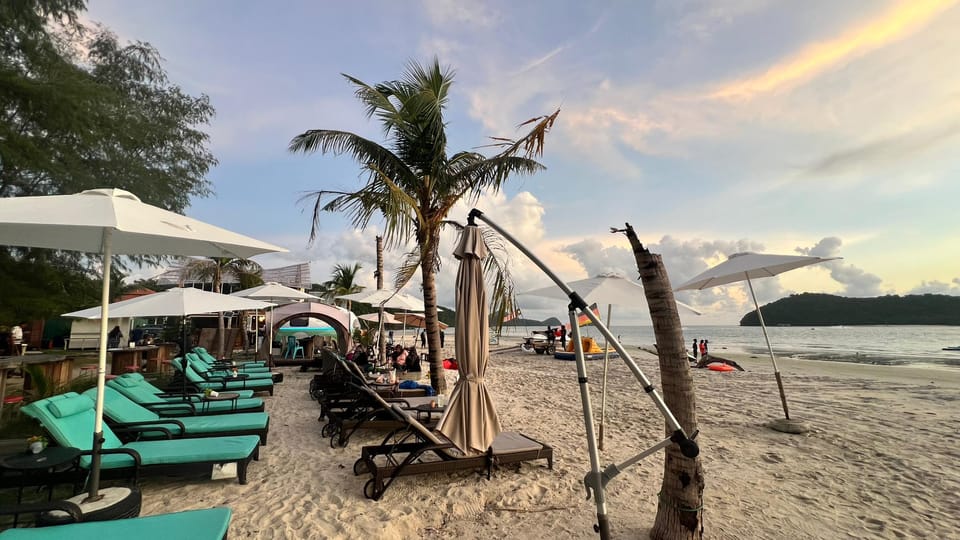
The beach itself is public and free, as all Malaysian beaches are. What you can pay for is a spot on it: a beach pass with a reserved sunbed runs from €10.08 and buys you a lounger, shade and a place to leave your things. Whether that is worth it depends entirely on how much you mind carrying a towel. In our inventory, though, this listing carries a single review — enough to know the price, not enough to judge the service.
Pantai Tengah, immediately south, is the same coastline with fewer people and a slightly older crowd. If Cenang looks too busy when you arrive, walk south rather than driving north.
Tanjung Rhu — the one worth the drive
Up on the island’s north-eastern corner, and by broad agreement the best beach on Langkawi: fine pale sand, shallow calm water, and limestone karst standing out of the sea in front of you. The name refers to the casuarina trees along the back of it.
It is also, crucially, not on the way to anything. That is why it stays quiet, and why it needs a plan.
Drive times quoted from Cenang vary a lot — some sources say 30 to 40 minutes, others closer to an hour. Both are probably right depending on the route and the traffic through Kuah. Budget an hour each way and treat anything faster as a bonus.
Go at low water if you can. The bay is shallow and the tide moves a long way here; at low tide the sand extends and the wading is the point of the place, while at high tide the swimming is better but the beach is narrower. Neither is wrong — just know which you are getting before you drive an hour.
Pasir Tengkorak — the small one in the trees
On the north-western side, backed by forest rather than by resorts, and regularly named by visitors in the same breath as Tanjung Rhu. It is small, it has shade, and it does not have a strip of anything behind it.
Its name translates unnervingly as something like “sandy skull”, which is the kind of detail that ends up in every guidebook and tells you nothing about the swimming. The swimming is good.
Datai Bay — the one you look at
About 45 minutes from Cenang, at the north-western end. This is where the island’s most expensive resorts sit — The Datai and The Andaman — in front of one of the oldest stretches of rainforest on the island.
Be clear about access before you set off. The beach itself is public, as everywhere in Malaysia, but the land behind it is resort property, and arriving as a non-guest is not the same experience as arriving as one. If you are not staying there, the honest recommendation is to treat Datai as a drive worth doing for the road and the forest, with a swim at the end of it, rather than as a day at the beach.
The safety part, in short
There is no jellyfish-free season here. Box jellyfish occur in these waters, and in November 2025 a two-year-old child died of complications from a sting at Pantai Cenang. The Langkawi Development Authority has since commissioned a study with Universiti Sains Malaysia and improved signage and monitoring at the busy beaches.
The short version for a beach day: read the signs on the beach you are actually standing on, respect a closure, and know where the nearest clinic is. Long sleeves and leggings in the water are normal here and not an overreaction. The full picture, including why the seasonal advice you will read elsewhere is not reliable, is in our guide to the best time to visit.
For anything you might want to carry with you, ask a pharmacy or your doctor before you travel. We are not a medical source.
Which beach for which day
| If you want | Go to | Allow |
|---|---|---|
| Food, watersports, no planning | Pantai Cenang | nothing |
| The same, quieter | Pantai Tengah | a 15-minute walk |
| Shallow, calm water and the karst view | Tanjung Rhu | a day, an hour each way |
| Shade and few people | Pasir Tengkorak | half a day |
| Rainforest and a drive | Datai Bay | half a day |
With children, the calm shallow water at Tanjung Rhu is worth the journey on a settled day, but the practical beach is still Cenang — everything you might need is behind you rather than an hour away. The rest of the family case, including the wet-weather options, is in Langkawi with children.
Getting between them — the actual problem
Here is the part the beach lists skip. Langkawi’s good beaches are spread around the rim of the island, with no useful public bus network between them. Ride-hailing works reasonably well around Cenang, Kuah and the airport and gets thin quickly outside that triangle. The specific failure is not getting there — it is standing at Tanjung Rhu at five in the afternoon trying to get back.
Three ways to solve it, in rising order of cost:
- Scooter. Cheap, everywhere, and genuinely how most independent visitors get around. Left-hand traffic, and the road to Datai has some serious bends.
- Rental car. The island is small, the roads are good, cars are available at the airport, and for two or more people it is usually cheaper per day than repeated taxis. It is worth comparing rental cars for Langkawi before you arrive rather than at the desk — and note that Malaysia drives on the left.
- A car with a driver for the day. No parking, no navigating, and someone who knows which bays are worth the detour. What that actually covers is set out in our guide to private island tours.
Whichever you pick, decide it before you book a hotel at the north end of the island. A quiet beach with no transport is a long week.
What the beaches do not do
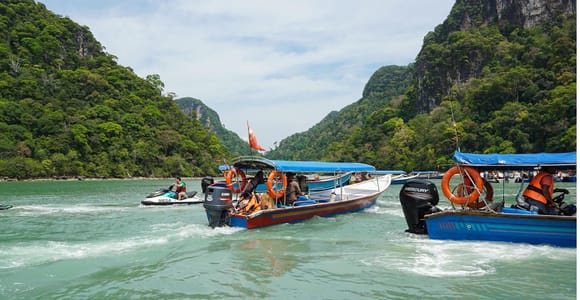
The karst islands, the eagles and the mangrove channels are not reachable from any of these beaches on foot. Dayang Bunting and Beras Basah are a boat trip — see island hopping, or the full archipelago listing, where 20 trips start at €11.65 — and the Kilim channels are a different trip again. Standing on Tanjung Rhu you can see the limestone; you get to it by water.